
Positive Masculinity, Cooking, and Skills Parties
How to be a Man, or Simply a Human

On a podcast that I’ve forgotten the reference to now, a commentator talked about how MAGA bros will debate all day how many genders there are but have trouble figuring out what a man is for themselves. I gave a hearty laugh at this, but after months of writing and research on this know clearly why. Despite what Tucker Carlson or Piers Morgan or any of the pundits might say about masculinity, it is not a universal objective idea. Even the father of ideals, Plato, had contradictory ideas about what constitutes feminine and masculine and their value in society, sometimes seeing them as unimportant in some regards to leadership and intellect, sometimes seeing one more valuable than the other, sometimes even seeing both features in all human beings.1 So perhaps trying to understand what constitutes masculine is a futile endeavor, but instead we should talk about how men can be models to other men and thereby help to fulfill what it is like to form a positive and healthy masculinity.

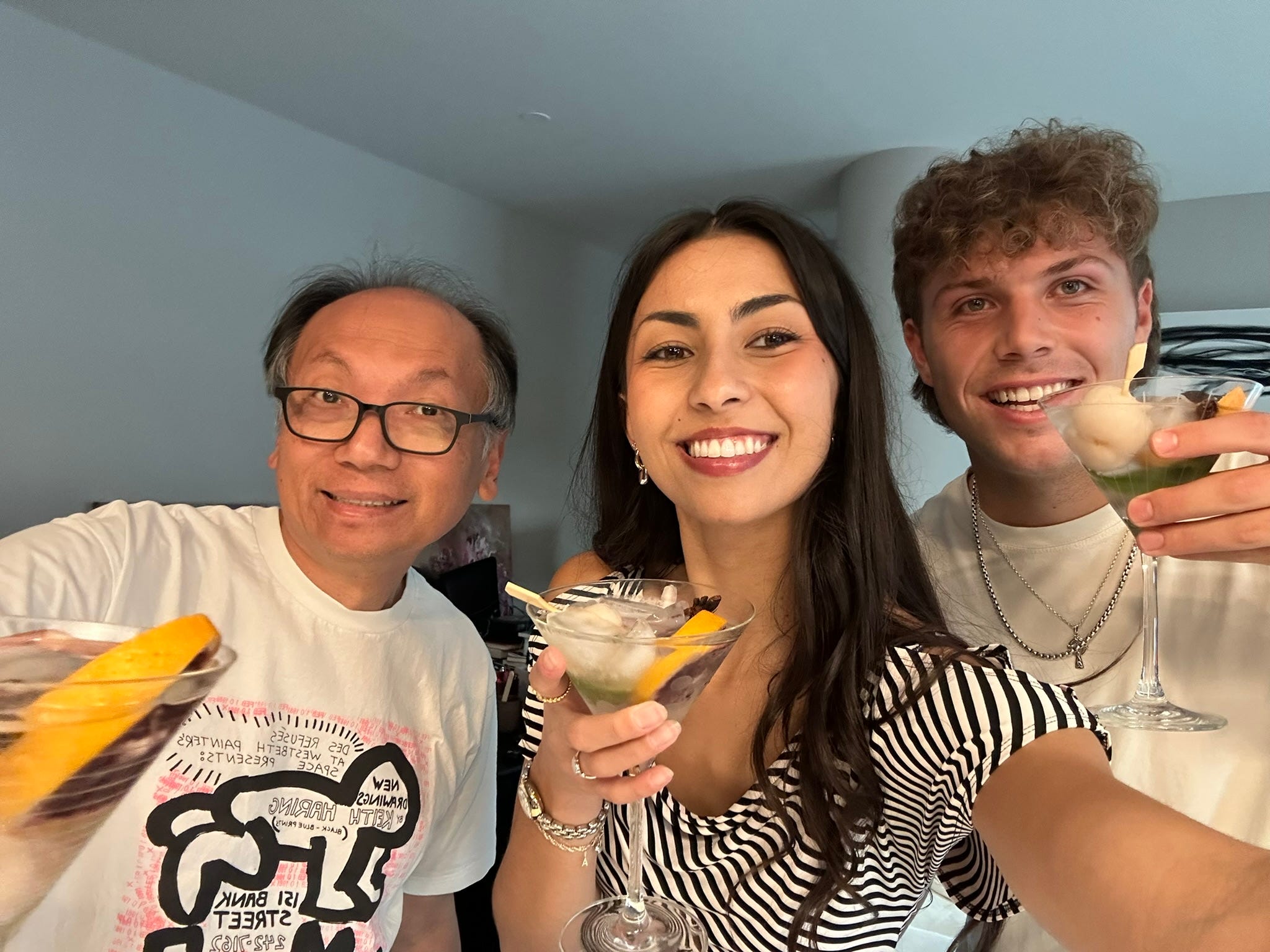
Several weeks ago we met a couple new to the building and I invited them over for drinks since one is an artist asking about my paintings. Soon we were talking about cooking. Austin has tried his hand at simple recipes and he glanced over at my sous vide cooker asking about it. He shared that his father, being an orthopedic surgeon, gets Wagyu beef from a client. The next week Austin ordered four steaks for us to try out. But it was not only the meat prep, Austin and I made Japanese style Brussels sprouts and Korean style cheese corn (recipes below). She was a great help and his girlfriend, Skyla, followed us around, cleaning our mess.
Most of the male friends I know do much of the cooking at home. That is not very unusual anymore, but somehow culturally people created this idea in the West that the place for the woman is “in the kitchen,” yet we look up to world-renowned chefs who are mainly men. These mixed messages show, like Plato, that there is definitely no universal claim on what is truly masculine or feminine. But what I thought was going on in the kitchen was me, being someone who likes to show off my cooking skills, showing a young man how to also provide for his partner in that way.
Toxic Masculinity?
One of my favorite capitalists, Scott Galloway, published Notes on Being a Man where he argued that “there is no such thing as toxic masculinity.” He continues by saying, “There is cruelty, there is criminal behavior, there’s abuse of power. But if you do any of those things, you are not masculine. That is anti-masculine. The far right, just to be political, conflating masculinity with coarseness and cruelty, that could not be less masculine.”
For Galloway, masculinity should be built on three main pillars: “man should be a provider, be the pursuer in romantic relationships and be a protector.” However, there are many instances both in nature and in our contemporary culture where both males and females share these traits. In nature, the “alpha” wolf can be either the male or female of the pack. The female can be both provider and protector. These roles are not part of the genetic makeup of an animal’s sexuality. In addition, being a provider may mean more than economic provisions. It might mean the ability to provide emotional and intellectual support for the family.
Our husky Layla is an alpha female and is only safe playing with other huskies in our neighborhood. At times we let her play with Kingsley, who is our neighbor’s Pomsky, a Pomeranian Husky mix. Layla would at times try to mount little Kingsley, making him wildly annoyed at her. I would pull her away and say, “That’s not how it works,” but in her need for dominance, she doesn’t care how anatomy works, but something more is at play. So, even in nature, it is difficult to parse the masculine and feminine attributes as Galloway wishes to express. I know his intent, however, to say that men don’t need to be afraid to be “masculine.” On the contrary, I’m not sure what being masculine is.
Recently, I’ve seen men do what is known as a “skill party” to teach other men the basics of everyday tasks around the house. For example, one person would hire a professional plumber to teach his male friends how to do basic plumbing work. I’ve found this to be more and more desired since I know many of my male friends who have not been taught how to do minor repairs around the house. I’ve been fortunate that I was shown how to do various household tasks by my father, but also I’ve been naturally handy as a person. Much of this came from my father not knowing how to do some of these tasks correctly, then me having to learn how to do them the right way. I can see how these might be important skills to have. Again, I don’t see this being a particularly male trait and know women who can learn these tasks just the same.
So What Does it Mean to be a Man?
Here, I would have to scratch my head and wonder about what healthy and positive masculinity looks like. It would consist of: being able to be vulnerable and open to failure, being in touch with one’s emotions, being able to express how one feels to another human being, setting healthy boundaries, being able to give and receive love appropriately, having the ability to listen. If anything, these traits are ones that men have often repressed in societies, especially in the West.
Most of the men who I count as close friends represent the above. I’ve seen them shed tears, talk about their feelings, cook, read good books, say “I love you” to me, but I’ve also drank beer with them, worked on building projects together, and bad mouthed each other in good fun. We are both tough and vulnerable toward each other in healthy ways.
The problem that we have in U.S. America is that there are very few examples of how men should express themselves in this way, so what is often signaled as “masculine” is something that many young men want to achieve, but do not achieve, so they become what is known as incels or “involuntary celibates.” This describes individuals who desire romantic or sexual relationships but are unable to find partners because of several factors, one being the expectations placed upon them. Consider this. A young man is bombarded with the idea that a real man needs to conquer a woman, sleep around, treat women harshly, and the such. Then when it comes time to do so, they see that this does not score them any points so they retreat into their own echo chambers and post in forums about how women are such and such. The result is that they cannot become who they want to be or if they do, it results in violations against women.
In other words, [MAGA-bros and incels] disparage the identity of another because deep down they have not figured out their own identity. They cannot see themselves as the men they want to be.
So these men are the same ones who then ridicule and hate gay, transgender, and other men who do not fit their own views of men, even though they themselves have a difficult time expressing who they are. In other words, they disparage the identity of another because deep down they have not figured out their own identity. They cannot see themselves as the men they want to be.
When I was teaching high school, I saw a good number of this, where because of physically and emotionally absent fathers, the boys did not know how to express themselves in healthy and constructive ways. Unlike the young men in Kenya who held hands together in friendship, many would roughhouse in the hallway, thinking that this was the only acceptable way to express non-sexual intimacy for one another. When I taught in Limuru, Kenya, some of the young men would hold hands and walk together as a sign of friendship. They would tell me that this was not romantic because being gay was often against cultural norms in post-colonial Africa. However, here in the states there is no acceptable way to express male intimacy other than “hanging out” with a male friend playing video games or sports. But in the era of social media influencers who want to dictate what being a “man” is, it has not become any easier to model for the young what being a man is about and what it is not about. Perhaps eventually we can figure this out once we understand what it means to be human.
Recipes:
See The Republic, Timaeus, and Symposium for the respective interpretations of masculinity and femininity.
Sharing this article with others is an easy, free way to support my work. Thank you!
Those recipes, Phuc!! Wow!!
And yes, you are wise.
Beautifully spoken thank you