
Lent and Ramadan
Week 2

On a large wall is a printed and laminated piece of art, 25 feet wide by 15 feet high, multi-colored stringy lines that dance together on a field of white. Sitting on the two-sided, plush gray couch in front of it with my laptop and AirPods in my ears and iPhone by my side, I am pulled in various directions by the media.
A reaction video of the Santhal tribe from rural India listening to the Cranberries song “Zombie” comes through my ears and I pause for a moment. The lyrics “In your head, in your head, they are crying,” coupled with one of the tribesmen setting his head on top of his arms and bitterly weeping, had me welling up in tears.
I see in my head the school bombing in Iran and the police violence toward peaceful protesters, and I wonder about my role in all of these atrocities, as merely a spectator or someone actively capturing this time with my words, each letter dedicated to their memory, that can never be lost.
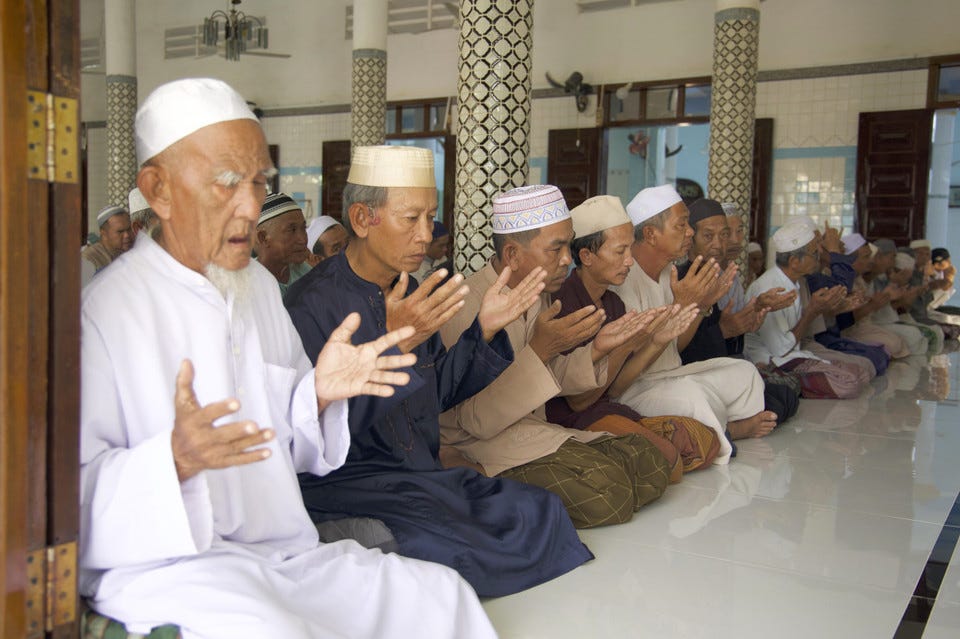
In 2026, Lunar New Year, the Fire Horse, galloped in at the same time as the start of Ramadan, and appropriately Ash Wednesday followed. In Vietnam there is a Muslim area, around the South Central Coast and Mekong Delta, where this time of year a visitor could expect nothing but hospitality.
The Vietnamese Muslims refuse to take people’s money for cab rides or food and even welcome strangers into their houses. The Cham Muslims are less than .01 percent of the population yet have found a way to live in harmony with those around them. It is not that they need to be generous because they are the minority, but they have found that life is so much better when tied to something greater than only a need to survive.
It is remarkable that so many of us in the West have a shortsighted view of our own mortality, that many don’t grasp that all of us will end up with the same fate eventually, whether Christian, Muslim, or the nature-centric Sarna Dharam religion of the Santhal tribe. But somehow the thought of some kind of otherworldly afterlife lessens the appreciation of this world, not holding it as a precious gift but a disposable commodity.
The repulsion of the thought that we will no longer exist one day is what makes us not see the gift of life in front of us, and the opportunities each day to alleviate the suffering of others. It is as if in stretching our egos for eternity makes not caring easier. Even God is not arrogant enough to to see that God’s own existence is held fragilly by God’s own ability to love. Because what is God without love, but only a figment of a child’s imagination?
Violence is simply a strategy to deal with differences that are fictions, entirely conjured up in our minds. It is kneading out the inconsistencies in our tribalistic brains, and when we can’t seem to do that, some people resort to anger, exclusion, rejection, and ultimately violence. Either the cross or the lynching tree. But another way, that few have chosen, is to listen, accept, embrace, hold space, and ultimately love.
Did not know about this Muslim community in Vietnam. Very interesting.
And the statement about violence being our way to deal with "differences that are fictions" definitely reminds me of the Allmuseri tribe in 'Middle Passage,' the National Book Award winning novel by Charles Johnson. That is exactly what they believe--that war and slavery grow out of our refusing to accept that we are not different.
"somehow the thought of some kind of otherworldly afterlife lessens the appreciation of this world, not holding it as a precious gift but a disposable commodity." thanks for this reminder, Phuc. Much needed in my own life right now. It reminds me Steve Jobs' "death is the engine of life." thanks for sharing.